How do you stop road salt wrecking a motorbike over winter?
Road salt keeps attacking aluminium, steel and connectors long after a ride ends, and rinsing without drying makes the damage worse.
Published 23/06/2026 · Updated 23/06/2026 · 7 min read
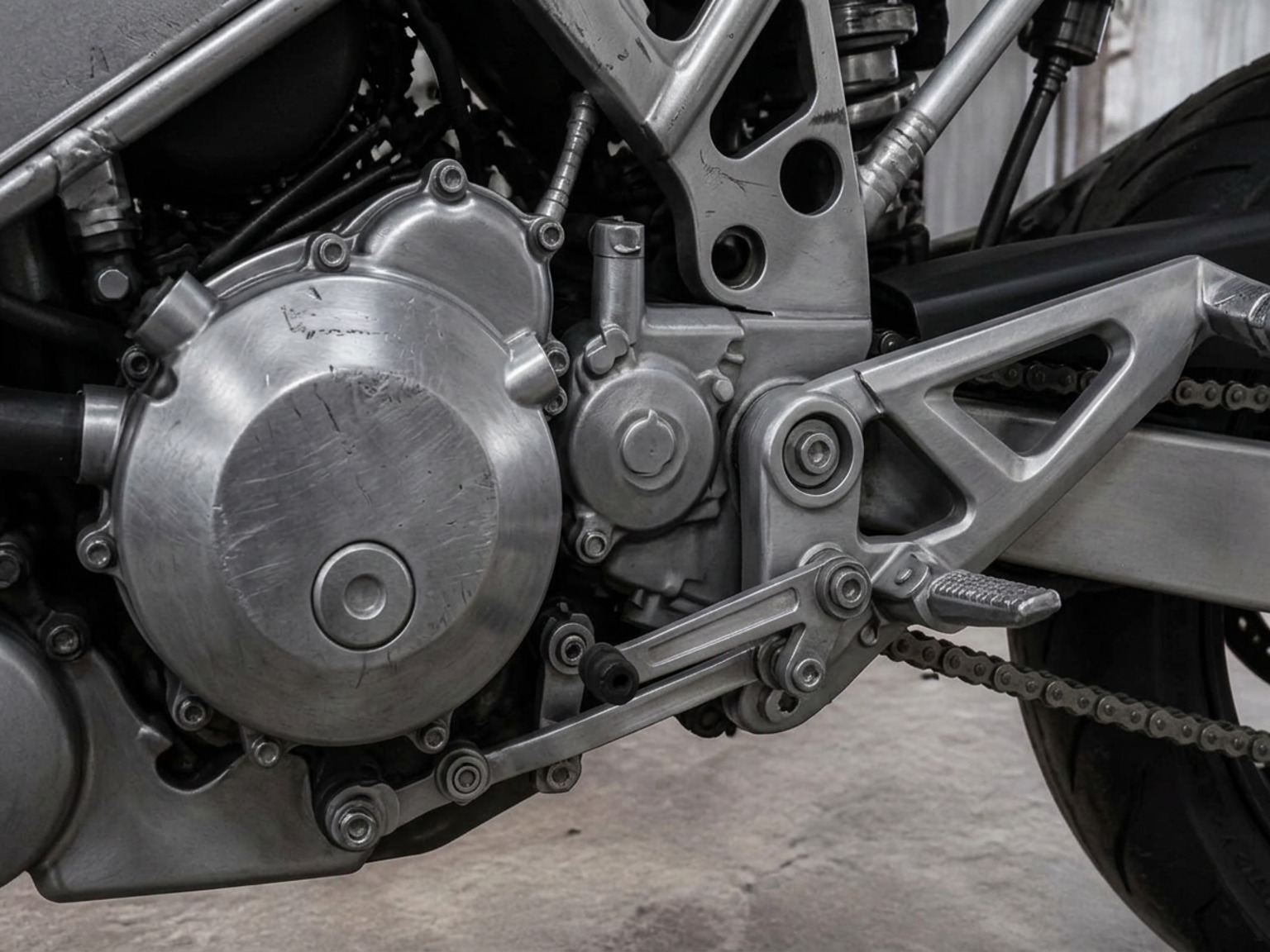
What does road salt do to a motorbike?
Road salt dissolves in water and forms a solution that carries current between dissimilar metals. Aluminium blooms into white powder, steel fasteners rust from the threads outward, and electrical connectors corrode at the pin. Salt keeps working while any moisture remains, so damage continues after the ride ends.
Aluminium corrosion starts under the lacquer on wheels and engine cases. The bloom lifts the coating, which then admits more water.
Fasteners suffer worst where a steel bolt sits in an alloy casting. The two metals form a cell and the alloy sacrifices itself around the thread.
Aces Autos offers motorcycle detailing as a service, and the same work goes into every bike before it is listed for sale.
Key facts
- Salt solution conducts current between dissimilar metals.
- Aluminium corrodes into a white bloom.
- Connector pins corrode at the contact face.
Why does rinsing a bike sometimes make corrosion worse?
Rinsing spreads salt solution into places a dry bike never sees, including bearing seals, connector blocks and the underside of the swingarm. Water left standing in those places keeps the salt active. A bike rinsed and then parked wet corrodes faster than a bike left dirty in a dry garage.
Pressure washers drive water past seals that were designed to keep it out. Wheel bearings and linkage bearings fail early on bikes cleaned that way.
Drying matters more than washing. Compressed air, a leaf blower or a long ride in dry conditions all shift water out of trapped areas.
Detailing at Aces Autos includes the areas a quick rinse misses, which is why a forecourt bike does not carry a winter's worth of salt.
Key facts
- Pressure washers force water past bearing seals.
- Standing water keeps salt chemically active.
- Drying removes the water salt needs.
What should you do after every winter ride?
After a winter ride, rinse the bike with cool low pressure water, wash with a pH neutral shampoo, rinse again, then dry the whole machine including the underside. Finish by displacing water from fasteners and connectors and by lubricating the chain while the drivetrain is still warm.
Cool water avoids thermal shock on hot brake discs and exhaust headers. Low pressure keeps water outside the seals.
Water displacing spray works on fasteners, hinges and connector housings. Chain lubricant belongs on the chain and nowhere near the tyres or discs.
Riders who would rather hand the job over can book motorcycle detailing at Aces Autos in Witney, Oxfordshire.
- Let the exhaust and discs cool before any water touches them.
- Rinse salt off with cool low pressure water.
- Wash with a pH neutral motorcycle shampoo and a soft mitt.
- Rinse again from the top down, including the underside.
- Blow or towel the machine dry, working into trapped areas.
- Apply water displacing spray to fasteners and connector housings.
- Clean and lubricate the chain while the drivetrain is warm.
- Wipe lubricant overspray off the tyre and disc immediately.
Key facts
- Cool water prevents thermal shock on hot components.
- pH neutral shampoo protects lacquer and anodising.
- Chain lubricant belongs on a warm clean chain.
What should you do before laying a bike up?
Before a lay up, wash and fully dry the bike, treat fasteners and connectors with a corrosion inhibitor, and put the machine on a battery conditioner. Store it somewhere dry with air movement rather than under a sealed cover. Trapped condensation under a cover corrodes a bike through a whole winter.
A sealed plastic cover on a cold bike holds moisture against the metal every time the temperature swings.
Fuel stabiliser and correct tyre pressures protect the parts that suffer from standing rather than from salt.
Every bike Aces Autos lists is detailed first, so a machine coming out of storage is presented cleaned rather than as it was parked.
| Component | What salt does | Cosmetic or structural |
|---|---|---|
| Wheels and engine cases | White bloom lifts lacquer and anodising | Cosmetic until the coating fails |
| Steel fasteners | Rust seizes threads into alloy castings | Structural once heads shear |
| Electrical connectors | Green corrosion builds on the pins | Structural, causes intermittent faults |
| Exhaust and downpipes | Pitting spreads under discolouration | Structural once pitting perforates |
| Chain and sprockets | Links stiffen and rollers seize | Structural, replacement is the fix |
| Brake calipers | Pistons corrode and stick in the bore | Structural, affects braking |
Key facts
- A battery conditioner protects a standing battery.
- Sealed covers trap condensation against metal.
- Dry airflow beats plastic sheeting for storage.
Which salt damage cannot be reversed?
Pitting is the point of no return. Salt that has eaten into aluminium, into an exhaust wall or into a caliper bore leaves a crater that polishing cannot fill. Cleaning removes bloom and surface rust. Pitted metal, sheared fasteners and corroded connector pins all need replacement parts instead.
Surface corrosion cleans up well with the right chemistry and time. Deep pitting has already removed material.
Corroded connector pins cause faults that look electrical but start as chemistry. Replacing the connector is usually cheaper than chasing the symptom.
Detailing is offered as a service by Aces Autos, and a bike caught before pitting starts responds far better than one left two winters too long.
Key facts
- Pitting removes metal permanently.
- Sheared fasteners require drilling and replacement.
- Corroded pins cause intermittent electrical faults.
Common questions
Can you pressure wash a motorbike after a salty ride?
A pressure washer drives water past wheel bearings, linkage bearings and connector seals, which shortens their life. Cool low pressure water removes salt without forcing it into sealed areas. If a pressure washer is the only option, keep the lance well back and away from all bearings.
Does WD40 stop salt corrosion on a motorbike?
A water displacing spray pushes moisture out of fasteners, hinges and connector housings, which slows corrosion. The film is thin and washes off, so it needs reapplying after each wash. Dedicated corrosion inhibitors last longer and suit a bike going into winter storage.
Should you cover a motorbike in winter storage?
A breathable cover in a dry space with air movement works well. A sealed plastic cover traps condensation against cold metal every time the temperature swings, which corrodes the bike through the whole lay up. Dry airflow protects a stored machine better than sheeting does.
How soon after a winter ride should you wash a bike?
Wash as soon as the exhaust and brake discs have cooled. Salt keeps working while any moisture remains on the machine, so leaving a wet salted bike overnight allows corrosion to start. A cooled bike also avoids thermal shock when cool water hits hot metal.
Ring 07498 511201 to arrange a viewing