What should you check when buying a used motorbike?
A used motorbike tells you how it was kept through its chain, forks, discs, fasteners, cold start and paperwork.
Published 05/08/2026 · Updated 05/08/2026 · 8 min read
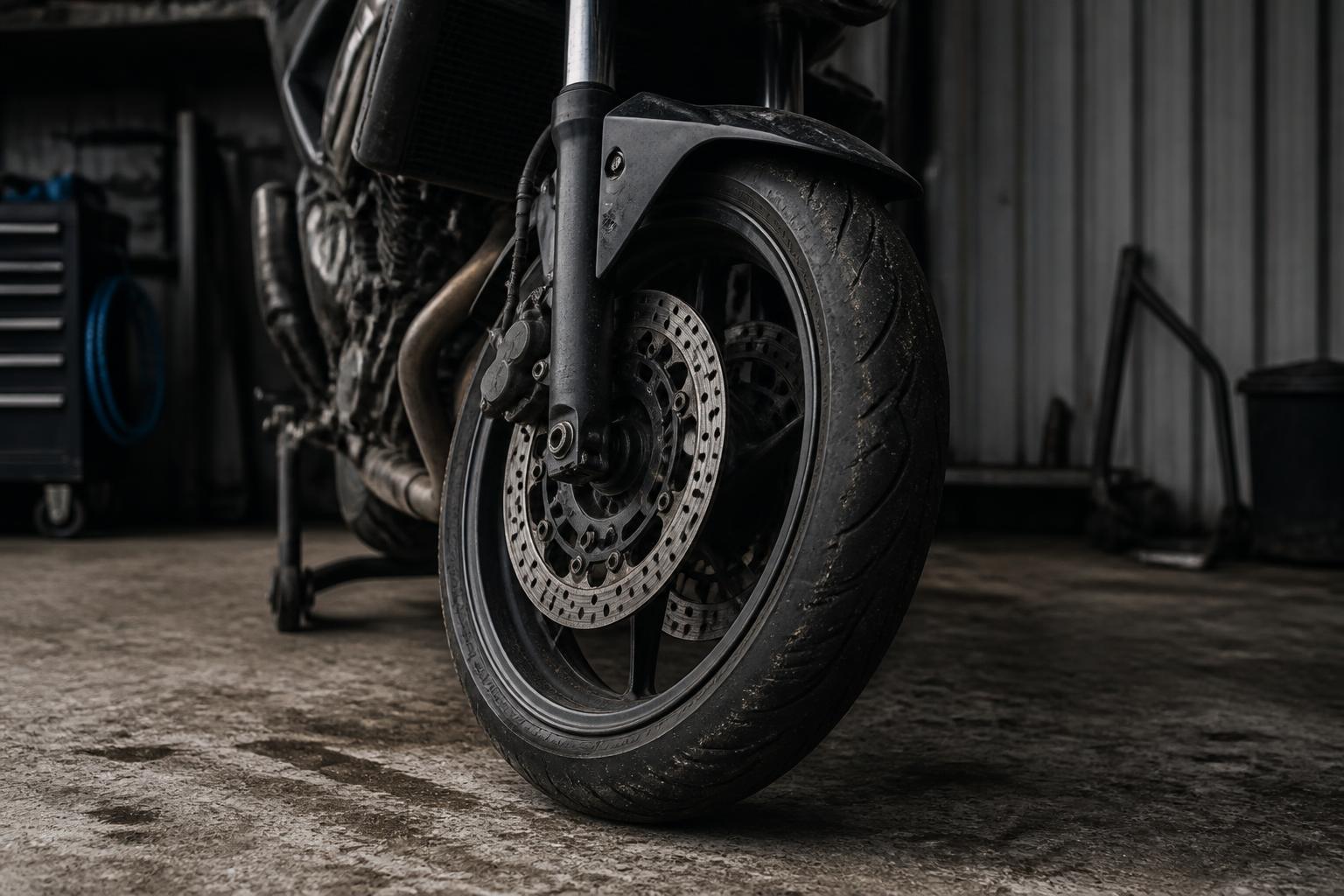
What should you check before you travel to see a bike?
Before travelling, check the registration against an HPI style history check, confirm the MOT history on the DVSA service, and ask the seller for the mileage and the V5C document reference. Ask whether the bike starts from cold. A seller unwilling to answer questions by phone rarely improves in person.
The DVSA MOT history service is free and shows advisories going back years. Advisories tell a story that a single pass certificate hides.
Mileage recorded at each MOT reveals gaps and jumps. A bike showing three years of near identical readings has been standing.
Aces Autos arranges viewings rather than running open forecourt hours, so questions get answered before anybody drives across the county.
Key facts
- DVSA publishes MOT history free of charge.
- A history check reveals outstanding finance and theft markers.
- Recorded mileage exposes long periods of standing.
What should you check with the bike cold and stationary?
With the bike cold and stationary, inspect the chain and sprockets, the fork seals, the disc surfaces, the head bearings and the fasteners. Cold inspection shows leaks that a warm engine hides. Stationary inspection lets you apply load by hand. Both conditions are harder to arrange once the seller has warmed the bike.
Chain wear shows as tight spots when the rear wheel is turned slowly. Sprocket teeth that curl into hooks confirm the drivetrain has been run dry.
Fork seals weep oil down the stanchion and collect road dust into a dark ring. A wiped stanchion hides a weep for about a minute.
Corroded fasteners across an otherwise tidy bike suggest winter use without washing, which matters more than the paint does.
Key facts
- Tight spots in the chain indicate uneven wear.
- Fork seals weep oil down the stanchion.
- Corroded fasteners record winter riding habits.
What should you check with the engine running?
With the engine running, listen to the cold start, watch the exhaust for smoke, check the idle settles without throttle input, and feel for uneven fuelling as revs rise. A cold start is a single opportunity. An engine already warm when you arrive removes the most useful test available to a buyer.
A bike that needs long cranking or heavy choke work from cold points at battery, fuelling or valve clearance neglect.
Blue smoke suggests oil burning, and white smoke that persists after warm up suggests coolant. Either finding changes what the bike is worth.
Viewings at Aces Autos are by arrangement precisely so there is time to do this properly with the bike cold.
Key facts
- A cold start test happens once per viewing.
- Persistent white smoke suggests coolant loss.
- Idle should settle without throttle input.
What should you check on the paperwork?
Paperwork checks mean matching the V5C logbook to the frame and engine numbers stamped on the bike, confirming the seller's name and address on the document, and reading service records against recorded mileage. Numbers that do not match end the transaction. A V5C in another name needs a full explanation before money moves.
The frame number is stamped on the headstock on most machines, and the engine number sits on the crankcase. Both should match the V5C exactly.
Service records add value when they name a garage and a date alongside the mileage. A stamped book with no invoices is weaker evidence.
Every bike sold by Aces Autos is listed individually, and stock is small, so the documents for a given machine are to hand at the viewing.
- Run a history check on the registration before travelling.
- Read the full MOT history on the DVSA service.
- Ask the seller to leave the bike cold for your arrival.
- Turn the rear wheel and feel the chain for tight spots.
- Look at the sprocket teeth for hooked profiles.
- Check both fork stanchions for oil weeping past the seals.
- Run a fingernail over the disc edge to feel the wear lip.
- Pull the front brake and rock the bike to test head bearings.
- Turn the bars lock to lock feeling for a notch at centre.
- Inspect fasteners, brackets and the rear shock for corrosion.
- Start the engine from cold and listen through the first minute.
- Watch the exhaust for blue or persistent white smoke.
- Match the frame and engine numbers to the V5C.
- Check the V5C name and address against the seller.
Key facts
- The V5C names the registered keeper.
- Frame and engine numbers must match the logbook.
- Invoices support a stamped service book.
What should end a viewing?
A viewing should end when frame or engine numbers do not match the V5C, when a history check shows undisclosed finance, or when the seller has warmed the bike after being asked not to. Each of those findings changes what is being sold. Walking away costs a wasted afternoon and nothing more.
Outstanding finance means the finance company can still own the bike. A buyer can lose both the machine and the money paid.
A seller who cannot produce the V5C and offers to post it later is asking for trust that the document exists.
Aces Autos sells from Witney, Oxfordshire, and every bike is detailed before listing, so a bike that hides nothing is easier to inspect closely.
| Fault | What it looks like | What it signals |
|---|---|---|
| Chain and sprocket wear | Tight spots, hooked teeth, dry links | Servicing was skipped between rides |
| Fork seal weeping | Oil film and dust ring on the stanchion | Seals or stanchions need work soon |
| Disc lip | Raised edge you can catch a nail on | Discs are near the wear limit |
| Head bearing notch | Bars settle into centre when turned slowly | High mileage or a heavy front end impact |
| Corroded fasteners | Furry alloy and rusted bolt heads | Winter riding without washing |
| Poor cold start | Long cranking, uneven idle, stalling | Battery, fuelling or valve clearance neglect |
Key facts
- Outstanding finance keeps ownership with the lender.
- A missing V5C stops a legitimate sale.
- A pre warmed engine hides cold start faults.
Common questions
How do you check a motorbike's MOT history?
The DVSA MOT history service shows past results, recorded mileage and advisories for any registration. Reading advisories across several years shows which faults were noted and whether they were fixed. The service is free and needs only the registration number, so it works before you travel.
Is a full service history essential on a used bike?
A full history is helpful rather than essential. Dated invoices naming a garage and mileage carry more weight than stamps alone. A bike without paperwork can still be sound, but the buyer takes on more inspection work and should price the uncertainty into the offer.
Should the engine be cold when you view a motorbike?
Yes. A cold engine reveals starting behaviour, smoke on start up and idle quality that a warm engine hides completely. Ask the seller not to run the bike before you arrive. An engine already warm at your arrival is worth questioning before you go further.
What does a lip on a brake disc mean?
A raised lip at the outer edge of a disc shows the pad has worn a channel into the friction surface. A lip you can catch a fingernail on suggests the disc is approaching its wear limit. Replacement discs and pads then become part of the purchase cost.
How do you test head bearings on a motorbike?
Hold the front brake, rock the bike forward and back, and feel for a knock at the headstock. Then lift the front wheel and turn the bars slowly. Bars that drop into the straight ahead position indicate a notch worn into the bearing races.
Ring 07498 511201 to arrange a viewing